

January Is Hard
January feels like it’s the longest month of the year. The holidays are over, the weather is brutal, your motivation is missing, and suddenly it feels like everyone expects a “fresh start” while you’re over here in hibernation mode.
This 31-day January winter self-care challenge isn’t about New Year’s resolutions, glow-ups, or becoming a whole new person. It’s about surviving the January blues with a little more warmth, less pressure on ourselves, and realistic expectations for what this month actually feels like. And it doesn’t cost anything!
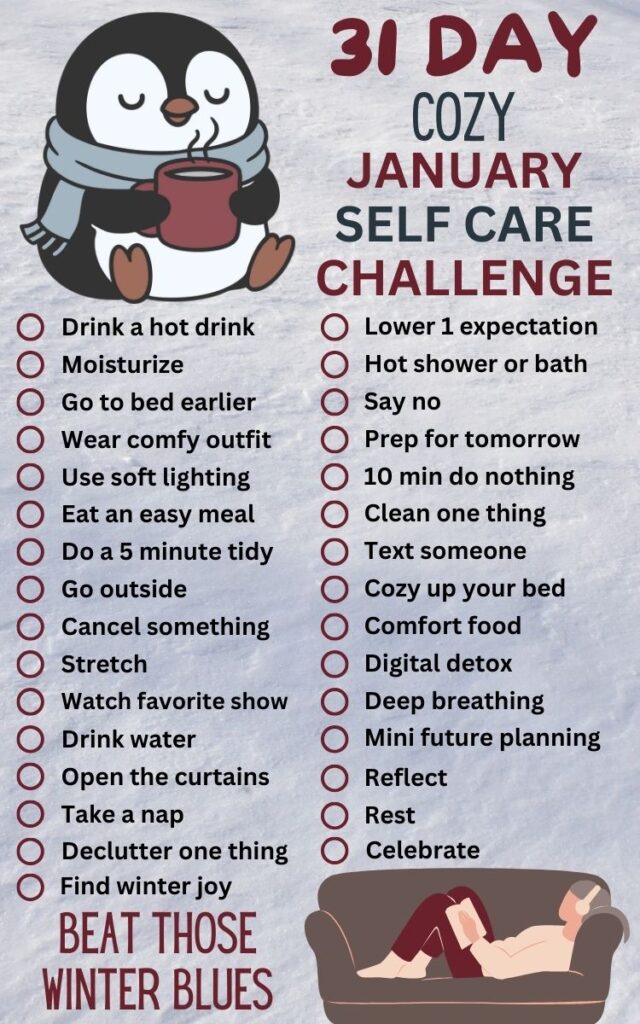
This challenge has:
- No 5 a.m. routines.
- No expensive wellness trends.
- No pretending winter is magical (because we know it sucks).
Instead, each day focuses on a small, manageable act of self-care – things that support your energy, your mental health, and your nervous system during the coldest, darkest and bleakest stretch of the year.
You can start on January 1st or jump in whenever you’re ready. Miss a day? That’s fine. Do two in one day? Also fine. You could even incorporate your favorites into your daily self-care routine. The goal isn’t perfection – it’s getting through January without burning yourself out.
Because in January, self-care isn’t about thriving. It’s about making it to February.
This post may contain affiliate links. If you make a purchase through these links, we may earn a commission at no additional cost to you. You can see our full Disclosure Policy here.
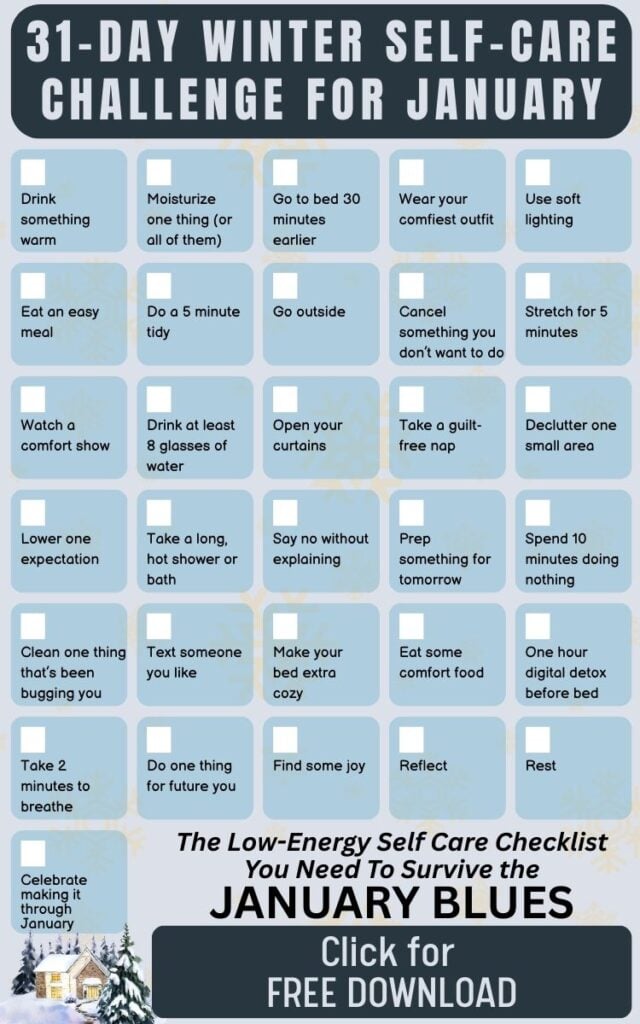
31-Day January Winter Self-Care Challenge
If you just want the challenge, you can download it here. But try to take the time to read why these activities are so beneficial for you.
Day 1 – Drink Something Warm
A hot beverage is too warm to gulp, forcing you to slow down and sip it mindfully. This pause in a busy day creates a moment of calm and an opportunity for reflection, which is central to self-care. Additionally, the physical sensation of warmth is deeply linked to feelings of emotional warmth, safety, and comfort.
Day 2 – Moisturize One Thing (or all of them)
Your skin is your largest organ. Cold air and low humidity in the winter months dries out your skin, making it feel tight, rough, itchy, and flaky. Applying moisturizing cream nourishes your skin, keeps it healthy, provides a moment for intentional self-focus, builds self-esteem, and reinforces the message that “I am worth taking care of.”
Day 3 – Go to Bed 30 Minutes Earlier
A good night’s sleep helps boost mental health (less depression/anxiety) and improves physical health (heart, immunity). It also sharpens focus & memory, stabilizes mood, increases productivity, and helps manage weight by regulating hunger hormones. Finally, sufficient rest allows your brain and body to repair and reset for a better, more energized day.
Day 4 – Wear Your Comfiest Outfit
Soft, loose fabrics signal relaxation to your nervous system. This reduces stress hormones like cortisol, boosts oxytocin for calm, and acts as a sensory anchor that provides comfort and security. It’s kind of like giving yourself a hug, helping to ease anxiety and support emotional well-being.

Day 5 – Use Soft Lighting
Warm, soft lighting with golden or amber tones mimics the natural light of a sunset or a cozy campfire, which are natural cues for winding down. This ambiance helps us shift out of stress mode and reduces anxiety, and provides a serene and inviting home environment perfect for relaxing after a long day.
Day 6 – Eat an Easy Meal
A simple, warm meal in winter provides nourishment, comfort, and sensory satisfaction while being easy to prepare, allowing you to relax and conserve energy. It reduces decision fatigue, protects mental energy and ensures your body still gets fuel on low-capacity days.
Day 7 – Do a 5 Minute Tidy
A five minute tidy is an effective self-care practice because it offers immediate psychological and physical benefits that contribute to overall well-being. By engaging in short bursts of organization, individuals can reduce feelings of overwhelm and achieve a sense of control, which are core components of mental health and self-care
Day 8 – Step Outside
Exposure to natural light, even on cloudy days, helps your body generate Vitamin D to regulate your circadian rhythm, boost “feel-good” serotonin levels in the brain, and improve immune function. Additionally, fresh, cold air can sharpen your thinking and improve concentration, while the unique sensory experience of winter helps you practice mindfulness by focusing on the present moment, pushing away stressful thoughts and worries..
Day 9 – Cancel Something You Don’t Want to Do
Winter is a harsh season of conservation – a time for slowing down and introspection – while the world still expects you to perform the same. Prioritizing rest and protecting your energy reduces burnout and reinforces healthy boundaries. It’s not laziness; it’s honoring your body’s need for rest.
Day 10 – Stretch for 5 Minutes
Cold weather causes muscles to naturally tighten to conserve heat, making them less elastic and more prone to injury. Regular stretching helps maintain flexibility, improves range of motion in your joints, and reduces the risk of strains or pulls. Stretching also has a calming effect on the body and mind, helping to release the physical and mental tension that can accumulate during the busy, colder months.
Day 11 – Watch a Comfort Show
Watching your favorite shows leverages the psychological need for comfort, escapism, and social connection during a season characterized by cold weather and reduced daylight hours. Familiar characters and predictable plots offer a sense of safety and security, which is particularly comforting when the external environment is harsh and unpredictable.
Day 12 – Hydrate
Cold, dry air (indoors and out) and reduced thirst cues make it easy to become dehydrated. Proper hydration supports energy, mental clarity, skin health, immune function, and temperature regulation, even when you don’t feel as thirsty. It helps your body manage daily functions, fight winter illnesses, and maintain healthy skin and organs.
Day 13 – Open Your Curtains
The reduced natural light during winter can contribute to Seasonal Affective Disorder (SAD) or the “winter blues”. Letting in sunlight stimulates the production of serotonin, a mood-boosting neurotransmitter. It can increase energy levels and improve cognitive function and alertness, helping you feel more awake and productive.
Day 14 – Take a Guilt-Free Nap
A well-timed nap provides a necessary mental and physical reboot. Aim for an early afternoon power nap of around 20 to 30 minutes to feel refreshed without entering deep sleep stages. Napping can lower blood pressure, calm the nervous system, and offer a psychological “pause” that helps reset emotional responses and improve patience.
Day 15 – Declutter One Small Area
Clutter creates visual noise and can increase cortisol (stress hormone) levels, making you feel overwhelmed and anxious. Decluttering lowers these stress levels, while creating a calmer, more serene atmosphere in your home. The resulting sense of accomplishment triggers the release of dopamine, a “feel-good” hormone, which can improve your mood and provide a confidence boost.
Day 16 – Lower One Expectation
The body’s natural rhythms often slow down in winter. When expectations are high but energy is low, a cycle of stress, guilt, and frustration can develop. By deliberately allowing yourself to be less productive and rest more, you are practicing self-compassion and preventing burnout. Setting more manageable goals helps break this cycle, fostering a more positive and accepting mindset.
Day 17 – Take a Hot Shower or Bath
The warmth and water pressure raise body temperature and help to soothe tense, sore muscles and joints, promoting physical relaxation. The ritual of a warm bath or shower also serves as a dedicated time to unwind, which helps to lower stress levels and calm the nervous system. Additionally, the quiet environment offers an opportunity for mindfulness, allowing you to temporarily escape daily distractions and focus on deep breathing and relaxation.
Day 18 – Say No Without Explaining
Declining extra commitments is an act of self-respect and self-compassion that shows you value your own time and energy. Saying “no” allows you to respect your body’s natural needs and protect your mental health so you have the energy and vitality to thrive when spring arrives. Additionally, setting boundaries helps you avoid feelings of resentment and fosters healthier, more authentic relationships built on mutual respect.
Day 19 – Prep Something for Tomorrow
Planning ahead reduces stress and anxiety because you are exerting control, creating clarity, and freeing up mental space. It allows for more present experiences and spontaneity, and ensures you prioritize your own needs. Some ideas are to prepare clothes, make a short to-do list, tidy up, or plan meals (like setting a crockpot) to minimize morning rush and stress.
Day 20 – Spend 10 Minutes Doing Nothing
Give both your body and mind a necessary break from constant stimulation by just sitting and doing nothing for 10 minutes. When you are not actively focusing on a task, your attention shifts to inner thoughts. This state of mind allows for wandering thoughts and internal reflection, often leading to creative insights and solutions to problems you might have been struggling with
Day 21 – Clean One Thing That’s Been Bugging You
Cleaning offers immediate, visible results and accomplishing a goal, even a small one like this, triggers the release of endorphins and dopamine, boosting your mood and energy. Putting off tasks can lead to feelings of guilt and inadequacy. By tackling one specific thing that has been bugging you, you break that cycle and experience relief, which can inspire further productive action.
Day 22 – Text Someone You Like
Human connection is vital for mental and emotional health, and sending a text is an easy, low-pressure way to break feelings of loneliness or isolation. Texting allows both parties the flexibility and time to craft thoughtful responses without the pressure of an immediate, in-person or phone conversation and allows you to communicate without being overly self-conscious.
Day 23 – Make Your Bed Extra Cozy
A cozy, comfortable bed leads to fewer sleep disruptions and more restful sleep. Adding more plush textures is a simple ritual that provides a mental boost and a sense of accomplishment or control over your environment and sets a positive tone. Put on some clean sheets, add some extra blankets and pillows, and soon you’ll be enveloped by warmth in a haven of peace, calm, and utter relaxation where worries melt away.
Day 24 – Eat Something Comforting
Comfort foods often evoke happy childhood memories or times with loved ones, creating a powerful sense of warmth and security. They can temporarily reduce feelings of loneliness, anxiety, or depression by activating thoughts of connection and comfort. Eating comfort foods can be a conscious act of self-care, providing a tangible way to nurture yourself when feeling overwhelmed or down.
Day 25 – One Hour Digital Detox Before Bed
Constant notifications and information flow keep your nervous system in a state of high alert. The blue light emitted by screens also suppresses melatonin production, interfering with your natural sleep cycle. Disconnecting for an hour allows your mind to unwind, lowering stress levels and promoting emotional balance. Taking that digital detox one hour before bed can also help regulate your circadian rhythm, leading to more restful sleep.
Day 26 – Take 2 Minutes to Breathe
Deep breathing directly calms your nervous system, shifting you from “fight-or-flight” to “rest-and-digest” mode. It reduces stress hormones, lowers heart rate/blood pressure, and increases oxygen, leading to immediate calm, better focus, and improved mood and sleep. It’s a free, accessible way to manage anxiety, pain, and tension, offering immediate relief and long-term benefits for mental and physical health.
Day 27 – Do One Thing for Future You
When you think of your future self – as you do for loved ones – your brain lights up similarly and increases your drive to act in their best interest. It builds a stronger connection to a later version of you, making you more likely to make present choices that benefit that future person, reducing future regrets and boosting long-term well-being. Some ideas are to do one small chore before bed (like unloading the dishwasher or putting laundry away), or make one intentional choice about your well-being (like reading 10 pages, stretching, or drinking water).
Day 28 – Find Some Joy
You can find joy in winter by embracing coziness (hot drinks, blankets, candles), getting creative (crafts, journaling, cooking), staying active (winter sports, walks, dancing), connecting with others (games, calls), and maximizing light (SAD lamps, getting outside) to combat the blues and enjoy the season’s unique opportunities for rest and fun. Pick something that brings YOU joy.
Day 29 – Reflect
The intentional process of looking inward to examine your own thoughts, emotions, behaviors, and experiences assist you to gain insight, understanding, and personal growth. It’s a deliberate pause from the automatic “autopilot” of daily life to analyze what you do and why you do it, and helps you learn from past actions and make informed decisions for the future.
Day 30 – Rest
Rest is a vital and fundamental human necessity, not a luxury or a reward to be earned. By prioritizing rest, you are actively maintaining your overall health and ensuring you have the physical and mental capacity to function effectively and live a fulfilling life. Neglecting it leads to physical exhaustion, mental fog, and emotional instability.
Day 31 – Celebrate Making It Through January
Acknowledge that you have not only survived the January blues – you’ve conquered them! You have transformed a typically bleak month into a period of renewal and personal growth by embracing quiet time for reflection, finding joy in small winter wonders, nurturing yourself, and setting new, positive habits. It’s a nod to survival, motivation, and the simple fact that you’re ready for February and a better year ahead.
If you completed every day of this challenge—amazing.
If you skipped days, doubled up, or only did a handful—also amazing.
This 31-day winter self-care challenge was never about perfection. It was about giving yourself small moments of relief during one of the hardest (if not THE hardest) months of the year. About choosing comfort over pressure. About staying regulated, rested, and supported while winter did its thing.
Self-care in January isn’t about routines you’ll keep forever or habits you’ll suddenly love. It’s about getting through the dark, cold stretch with your mental health intact and your expectations realistic.
Take what worked. Leave what didn’t. Come back to these ideas whenever winter feels heavy again.
And if all you did this month was survive – you did exactly what you needed to do.